Series:Imported Softwood / SPF Series
Origin:Canada (Western / Eastern), Northern United States
Species:White Spruce, Lodgepole Pine, Subalpine Fir, and mixed softwood species
Canadian SPF is composed of Spruce (Spruce)-Pine (Pine)-Fir (Fir) species, including White Spruce, Lodgepole Pine, and Subalpine Fir. Because these species have extremely similar physical properties, they are collectively referred to as SPF.
SPF grows in northern temperate forest regions, resulting in tight-grained, high-strength lumber with generally small and sound knots.

Growth Environment
White spruce and its mixed species are distributed in the interior regions of British Columbia. It is less common in southern areas and more prevalent in northern regions. It usually grows in pure stands, but is also a major component of mixed forests, commonly associated with species such as poplar, birch, balsam fir, western larch, black spruce, lodgepole pine, jack pine, subalpine fir, and Douglas fir.

External Characteristics
White spruce is a medium-sized tree with a relatively uniform conical crown. It can grow up to 40 meters in height with a diameter of up to 1 meter. The bark is loose and scaly, grayish-brown in color. The needles are slightly square-shaped, sharp and stiff, and appear gray-green during the growing season. White spruce can live up to around 300 years.
SPF has a light color ranging from white to pale yellowish-brown, with most pieces appearing white. Heartwood and sapwood have similar coloration. The earlywood zone is wider than the latewood, and the transition is gradual. It is typically straight-grained with fine texture and many knots. Quarter-sawn lumber or veneer shows faint growth ring patterns and may include intergrown small sound knots and pin knots. It contains resin but almost no resin pockets.
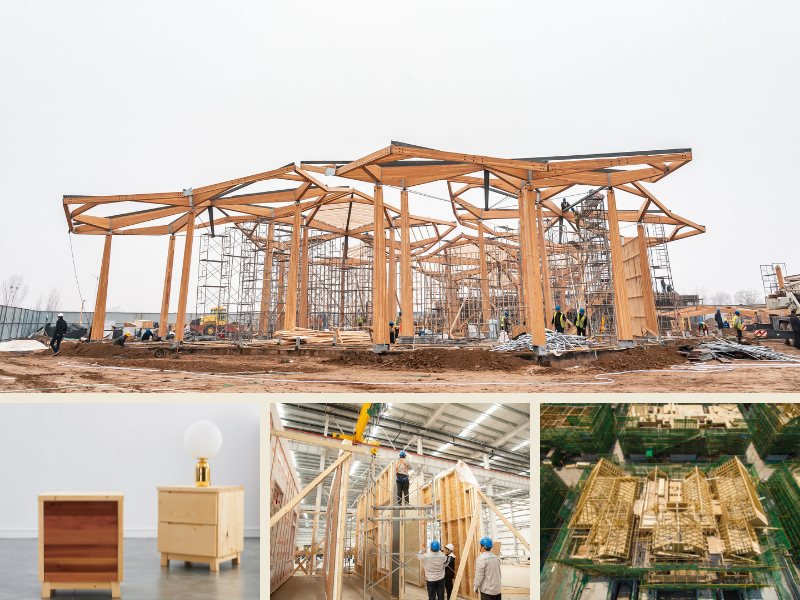
Kiln-dried SPF is an ideal material for residential and commercial timber construction. It is lightweight and available in various sizes and lengths, widely used in prefabricated housing and roof truss systems. The kiln-drying process improves its strength and stiffness, as well as resistance to decay and insects. It also enhances dimensional stability, quality, and heat resistance, while reducing shrinkage and warping.
Canada SPF Performance Table
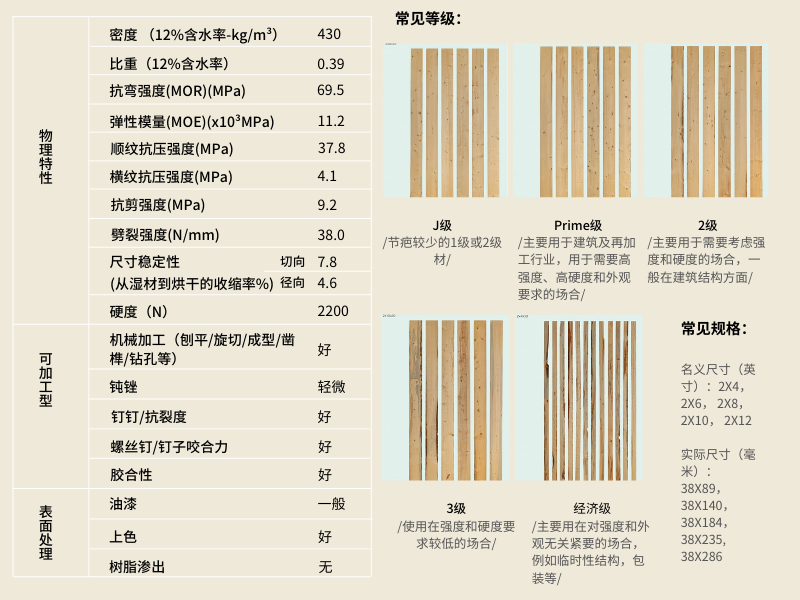
In the North American construction market, SPF is one of the main softwood lumber species. Due to its abundant resources and excellent performance, it is widely used in structural applications, as well as in processing industries such as economical solid wood furniture and pallets.
Project Cases